
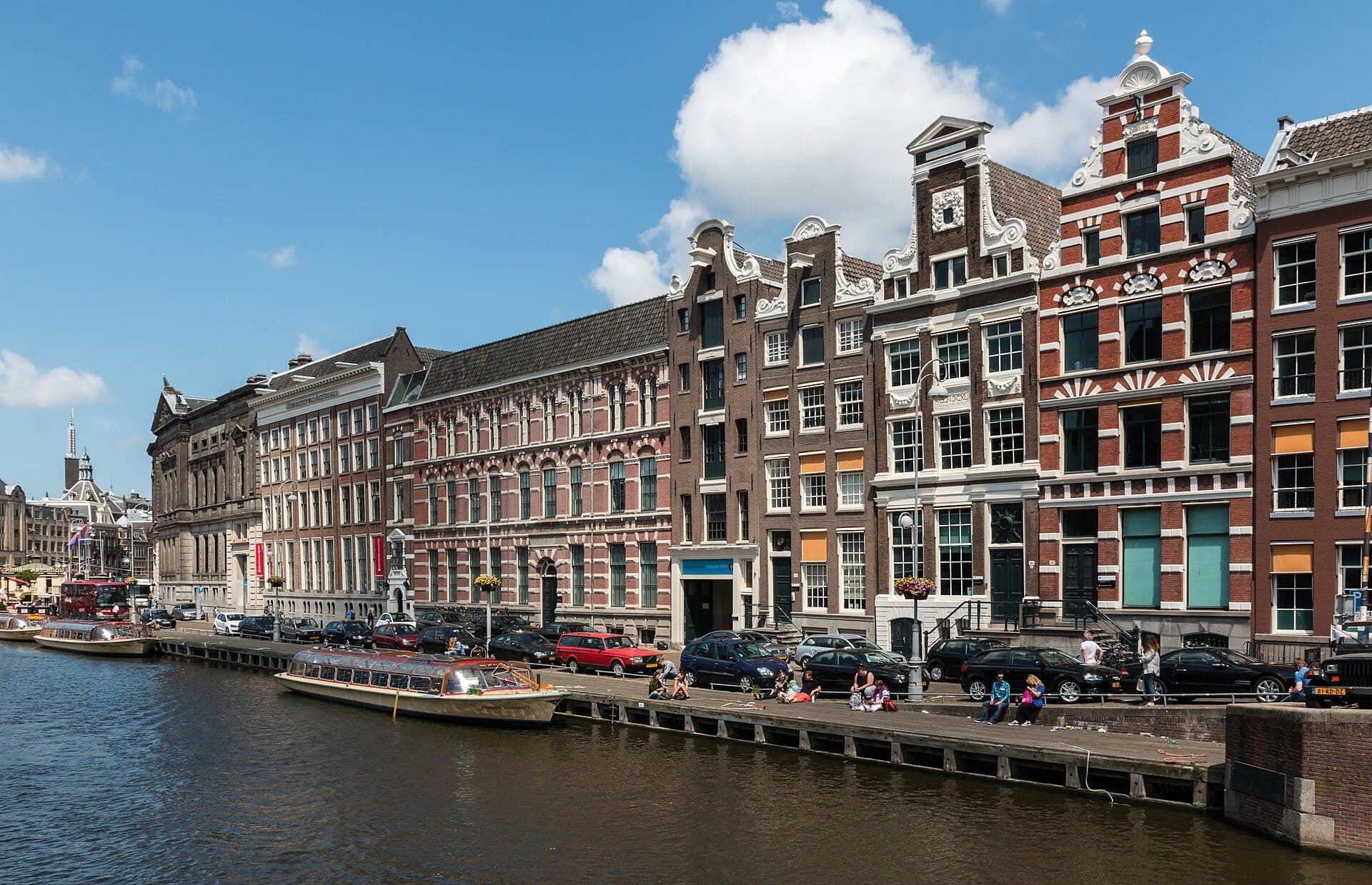
The short answer
Two days in Amsterdam is enough for the three big museums and the old centre, and the order matters more than the list. Done in the sequence below you walk 74.8 minutes between stops across both days, about 6.23 km. Done in the worst possible order of the same ten stops you walk 141.9 minutes and 11.82 km, which is an extra hour and eight minutes on your feet for exactly the same trip.
- Day one: Rijksmuseum, Van Gogh, Vondelpark, Leidseplein, the Nine Streets. 49.7 minutes of walking, and the shortest of the 24 possible orders that start at the Rijksmuseum.
- Day two: Noordermarkt, Anne Frank House, Dam, Oude Kerk, Ons' Lieve Heer op Solder. 25.1 minutes, the shortest of all 120 orders of those five stops.
- Do not start day two at the Anne Frank House. It costs 5.4 minutes, and you can move it because it is open until 22:00, the widest window of the three museums.
- Book the Anne Frank House first, then plan. Tickets go on sale Tuesdays at 10:00 for a visit six weeks later, online only. It is the one thing here that cannot be improvised.
The two articles that rank above everything else for this search add up to 17,300 words between them. Between the two of them, they contain one measured walk: five minutes from the Rijksmuseum to the Van Gogh Museum. The longer of the two, at 9,838 words, contains none at all, and says that "the order will depend on which museums you're doing" without a single number after it.
Which is strange, because an itinerary is a problem of order. The list of things worth seeing in Amsterdam is not in dispute and has not changed in twenty years. What you are actually choosing when you read one of these pages is a sequence, and a sequence has a cost you can measure.
So we measured it. We geocoded fourteen points, asked a routing engine for the walking time between every pair of them, and then tested every possible order of each day. Not a clever approximation: with five stops there are 120 orders and a computer tries all 120 in a thousandth of a second. The answer below is exact.
The two days, and what the wrong order costs
Each day below is the shortest order of its own stops. The last two columns are the same stops walked in the worst order possible, which is the thing nobody publishes: the price of getting it wrong.
Walking time by day, best order against worst
| Day | Best | Distance | Worst | Penalty |
|---|---|---|---|---|
| Day 1 | 49.7 min | 4.15 km | 79.9 min | +30.2 min |
| Day 2 | 25.1 min | 2.08 km | 62 min | +36.9 min |
Swipe to see the rest of the table.
Walking times and distances: OpenRouteService on the OpenStreetMap walking network, one matrix request covering 14 points, 15 September 2026; every point geocoded against OpenStreetMap. The best and worst orders are exact, not approximate: every permutation was tested. Times of day are our proposal, derived from the opening hours, not a measurement.
Over two days that is 74.8 minutes against 141.9. The order is worth 67.1 minutes and 5.59 km, which on a two day trip is most of a museum.
Nobody walks the theoretical worst order on purpose, and we are not suggesting anyone does. The point of the worst column is that it puts a number on the range: this is how much room there is between a good plan and a bad one, in a city small enough that people assume it does not matter.
Day one: the two art museums
49.7 minutes of walking, 4.15 km. The order is fixed at one end by the Rijksmuseum, which closes at 17:00 and therefore has to go early, and the rest falls out of the geography.
Day one, in order
| Time | Stop | Walk from previous |
|---|---|---|
| 09:00 | Rijksmuseum | start |
| 11:30 | Van Gogh Museum | 5.0 min |
| 13:30 | Vondelpark | 16.4 min |
| 15:00 | Leidseplein | 19.5 min |
| 16:30 | The Nine Streets | 8.8 min |
Swipe to see the rest of the table.
Walking times and distances: OpenRouteService on the OpenStreetMap walking network, one matrix request covering 14 points, 15 September 2026; every point geocoded against OpenStreetMap. The best and worst orders are exact, not approximate: every permutation was tested. Times of day are our proposal, derived from the opening hours, not a measurement.
09:00, Rijksmuseum
Opens at 09:00 and closes at 17:00, the tightest window of the three museums. That is the reason it goes first, not its reputation.
Eight hours is the shortest opening window of the three museums on this page, and that single fact decides the shape of day one. Everything else that day is open later or is not a building at all.
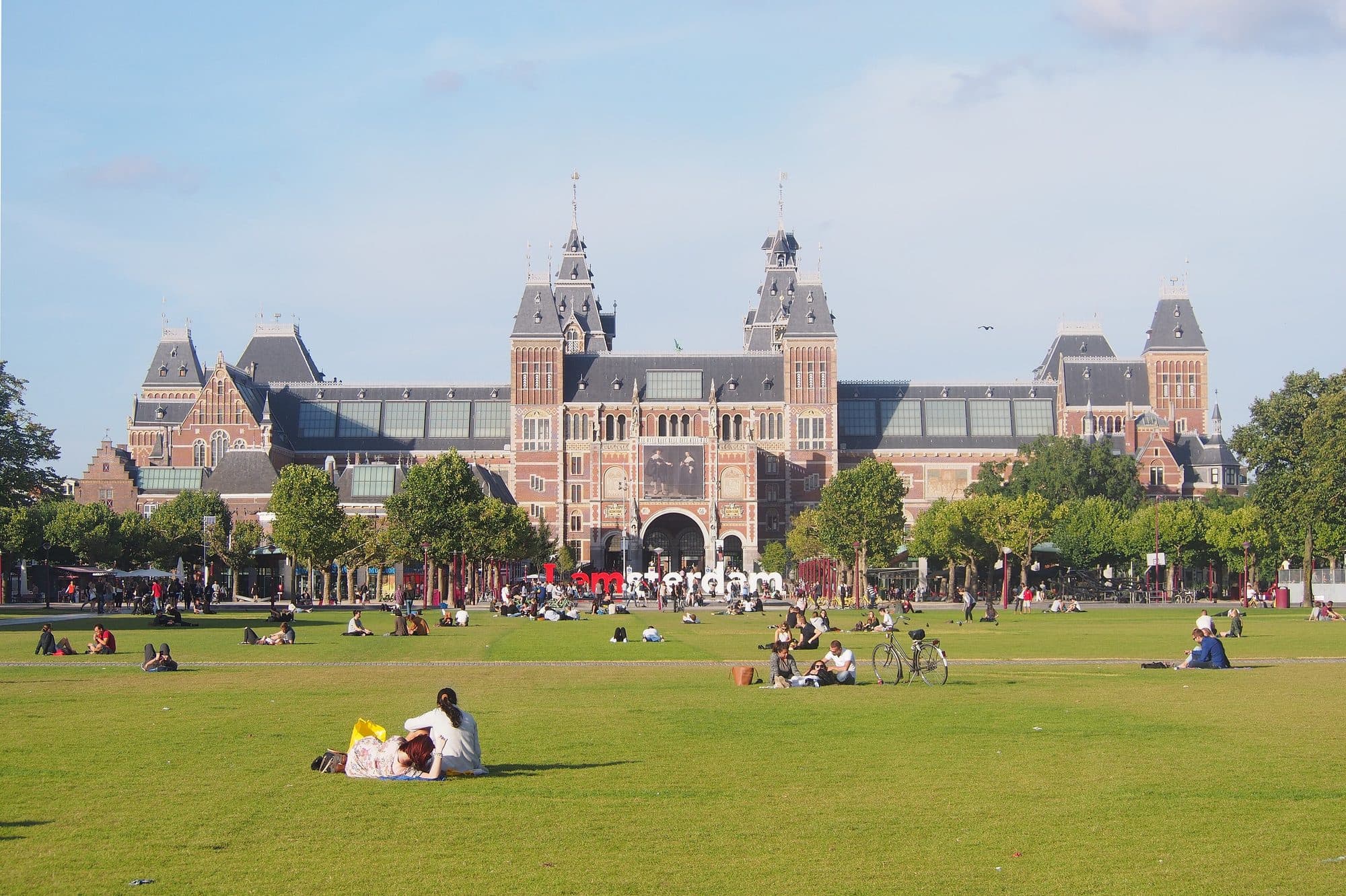
11:30, Van Gogh Museum, five minutes away
Five minutes from the Rijksmuseum, the shortest hop of day one. It closes at 18:00, an hour after the Rijksmuseum, which is the other half of the reason this pair goes in this order.
Five minutes is the shortest hop of the day and the only figure any competing itinerary publishes. It is also why every itinerary pairs these two, and on this one occasion the consensus and the measurement agree.
13:30, Vondelpark, sixteen minutes west
Sixteen minutes west, and the first long walk of the trip. It is also the only leg where the walking is the point rather than the cost of getting somewhere.
This is the first leg where you feel the distance, and it is the one leg where that is fine: the walk through the park is the reason the park is on the list. If you are short of time, this is the stop to cut, and cutting it takes the day down rather than shuffling it.
15:00, Leidseplein, the longest leg of the trip
The longest single leg of the two days. It earns it by sitting between the park and the canal ring: putting Leidseplein anywhere else in the day adds a return journey rather than saving one.
19.5 minutes is the longest single walk in these two days. It survives the optimiser anyway, because Leidseplein sits on the line between the park and the canal ring: moving it earlier or later means walking that stretch twice instead of once.
16:30, the Nine Streets
Ends the day inside the canal ring rather than out at the edge of it, which matters because this is where you will be eating.
Ending the day here rather than back at the museums is the other half of why the order works. You finish inside the canal ring, which is where you will want to eat, and the area we recommend staying in is a few minutes further along the same canals.
If you are going to eat well on one of the two nights
Day one ends in the canal ring at about half past four, which is the natural slot for a food tour: they run in the late afternoon and early evening, and they double as dinner. We priced ten of them from seven operators on the same day, and the cheapest of the comparable ones is also the longest and the best rated.
Day two: the old centre
25.1 minutes of walking, 2.08 km, which is half of day one. Everything on day two is inside a kilometre of everything else, and the whole day is a line running south east from the Jordaan.
Day two, in order
| Time | Stop | Walk from previous |
|---|---|---|
| 09:30 | Noordermarkt, in the Jordaan | start |
| 10:30 | Anne Frank House | 7.9 min |
| 12:30 | Dam Square | 9.3 min |
| 14:30 | Oude Kerk, in De Wallen | 6.1 min |
| 15:30 | Ons' Lieve Heer op Solder | 1.8 min |
Swipe to see the rest of the table.
Walking times and distances: OpenRouteService on the OpenStreetMap walking network, one matrix request covering 14 points, 15 September 2026; every point geocoded against OpenStreetMap. The best and worst orders are exact, not approximate: every permutation was tested. Times of day are our proposal, derived from the opening hours, not a measurement.
09:30, Noordermarkt, in the Jordaan
The northern end of the Jordaan. Starting here instead of at the Anne Frank House is what makes the rest of the day fall into a line.
Every itinerary we read starts this day at the Anne Frank House. Starting one street north instead turns the day from a there-and-back into a straight line, and saves 5.4 minutes: 25.1 against 30.5.
10:30, Anne Frank House
Timed entry booked weeks earlier, so in practice your slot decides this day rather than this page does. It is the only genuinely fixed point in the two days.
The time above is the one we would pick, but in practice you do not pick it. Tickets are sold for a specific slot and released six weeks ahead, so the honest instruction is to book first and rearrange the rest of day two around whatever you are given. The rest of this day tolerates it: nothing else on it closes before 17:00.
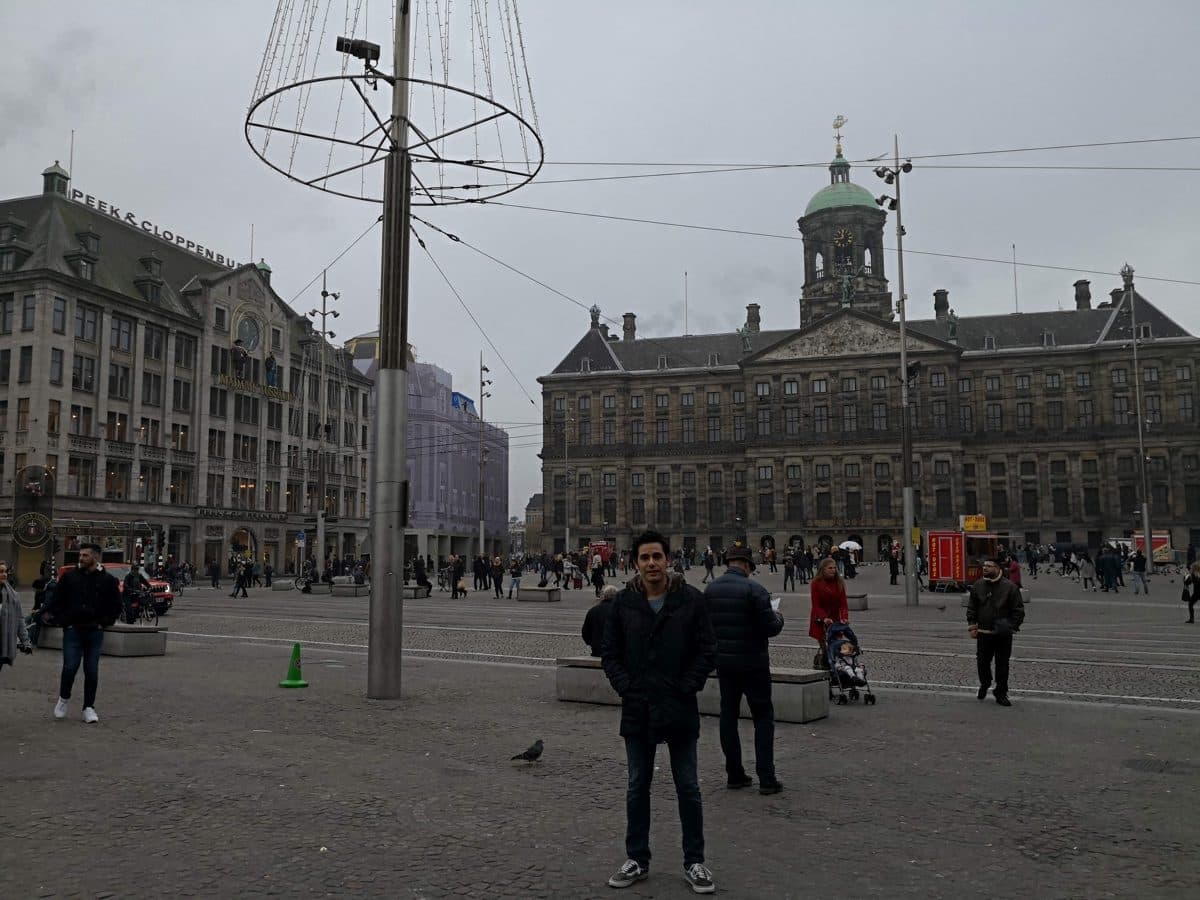
12:30, Dam Square
Halfway between the canal ring and the old centre, with the Royal Palace on it.
14:30, the Oude Kerk, in De Wallen
The oldest building in Amsterdam, standing in the middle of the Red Light District.
Six minutes from the Dam. This is the Red Light District in daylight, which is a different place from the one it is famous for being, and the church at the middle of it is the oldest building in the city.
15:30, Ons' Lieve Heer op Solder
A church hidden in the attic of a canal house, and at 1.8 minutes from the Oude Kerk it is the shortest walk anywhere in these two days.
It is the least famous stop of the ten and the one we would defend hardest, because it costs 1.8 minutes of walking to add. A whole church built in the attic of a merchant's house, from the years when Catholic worship was banned in the city, two minutes from the Oude Kerk.
Opening hours decide the order, not fame
The most famous of the three museums is the one with the most flexible hours. The Anne Frank House is open from 09:00 to 22:00, a thirteen hour window. The Rijksmuseum closes at 17:00 and gives you eight. So the museum that every itinerary puts first is the one that least needs to go first, and the one that quietly dictates the whole trip is the one nobody builds around.
The three museums: price, hours and how you book
| Museum | Adult | Opens | Closes | Window | Booking |
|---|---|---|---|---|---|
| Rijksmuseum | 25,00 EUR | 09:00 | 17:00 | 8 h | Online, timed |
| Van Gogh Museum | 25,00 EUR | 09:00 | 18:00 | 9 h | Online, timed |
| Anne Frank House | 16,50 EUR | 09:00 | 22:00 | 13 h | Online only, six weeks ahead |
Swipe to see the rest of the table.
Prices, opening hours and booking rules: the three museums' own websites, rijksmuseum.nl, vangoghmuseum.nl and annefrank.org, read on 15 September 2026. The Van Gogh Museum stays open until 21:00 on Fridays and shortens its hours in parts of October, November and December; the figure here is its standard day.
Read that table as a set of constraints rather than as information. The eight hour window is the binding one, so the Rijksmuseum anchors day one. The thirteen hour window is the loose one, so the Anne Frank House can sit anywhere in day two that its ticket allows. The Van Gogh Museum, at nine hours, sits in between and conveniently five minutes from the Rijksmuseum.
Two caveats we would rather print than hide. The Van Gogh Museum stays open until 21:00 on Fridays, which if your day one is a Friday changes what is possible: the museum day stops being the constraint. And it shortens its hours in parts of October, November and December, so the nine hour figure is the standard day and not a promise for every date.
What the tickets cost
Three museums, one adult: 25.00 at the Rijksmuseum, 25.00 at the Van Gogh Museum and 16.50 at the Anne Frank House, the last of which includes a 1.00 euro booking fee. That is 66.50 euros for the fixed part of a two day trip.
Under 18s are free at both art museums, so a family of two adults and two teenagers pays 100 euros for the two art museums instead of 200, and then 7.00 per child at the Anne Frank House. Students pay 16.00 at the Van Gogh Museum with a card from an institution in the EU or EEA.
About the Museumkaart, the annual pass that covers most Dutch museums: we could not read its price on its own website without entering the purchase flow, so we are not printing one. What we can give you is the threshold. Your three tickets come to 66.50 euros, so if the card costs more than that and you are here for two days, it does not pay for itself on these three museums alone. Check the number yourself and do that subtraction.
What the itineraries that rank get right
We ran the published itinerary of the fifth result through the same matrix, stop for stop, in the order it prints them. It deserves the result: its day one is exactly optimal. 49.6 minutes, which is the shortest order of those four stops that exists. Not close to it, it.
Its day two comes to 53.1 minutes where the best order of the same six stops is 48.6. It loses 4.5 minutes, and it loses them in the way described above: by starting at the Anne Frank House and walking back up into the Jordaan afterwards.
So the gap in this search is not that the popular itineraries are badly planned. Mostly they are not. The gap is that none of them tells you how far you are walking, which means you cannot tell a good plan from a bad one, and you cannot adapt one when your Anne Frank slot lands at four in the afternoon instead of half past ten.
That is why the tables on this page give the walk between every pair of stops rather than just a verdict. If your constraints are different from ours, the numbers still work; the conclusion is yours to redo.
Is two days enough
For these ten stops, comfortably, and the walking is not what limits you. 74.8 minutes spread across two days is about 37 minutes a day between stops, which is less than most people walk commuting.
What limits you is the eight hour window at the Rijksmuseum and how long you stay inside each museum, which is the one thing on this page we cannot measure for you. If you are the kind of visitor who does the Gallery of Honour and leaves, two days is generous. If you read the labels, day one is two museums and nothing else, and that is a legitimate way to spend it.
What two days does not leave room for is a day trip. Zaanse Schans is 17 minutes by train and Haarlem is 15, so both are tempting and both cost you a museum. We put the numbers on all ten of them in the day trips guide, and the honest reading for a two day trip is that they belong to a three day one.
What this page does not tell you
It does not tell you how long to spend inside anything. The times of day in the two tables are our proposal, worked back from the opening hours: they are not measurements and they are the only numbers on this page that are not.
It does not account for stopping. The walking figures are the routing engine's continuous walking time between two points, so a coffee, a queue or ten minutes looking at a canal are all extra. Treat 74.8 minutes as the floor.
And it assumes you are walking, which in Amsterdam is the right assumption for these ten stops and the wrong one if it rains hard. Every area of the city is within six minutes of a tram stop, which we measured in the accommodation guide.
Questions people actually ask
Is 2 days enough for Amsterdam?
For the three big museums and the old centre, yes, and the walking is not what stops you. In the order on this page the whole two days comes to 74.8 minutes on foot between stops, about 6.2 km. What limits you is opening hours: the Rijksmuseum shuts at 17:00, so the museum day has an eight hour window and no more.
What order should I do Amsterdam in for two days?
Day one, Rijksmuseum, Van Gogh Museum, Vondelpark, Leidseplein, the Nine Streets: 49.7 minutes of walking. Day two, Noordermarkt, Anne Frank House, Dam Square, Oude Kerk, Ons' Lieve Heer op Solder: 25.1 minutes. Both are the shortest of every possible order of those stops, calculated on the walking network rather than guessed.
How far in advance do I need to book the Anne Frank House?
Tickets are released every Tuesday at 10:00 CEST for a visit six weeks later, and they are sold online only: there is no door sale at all. That makes it the one fixed point in a two day trip, and everything else on this page bends around whichever slot you get.
How much does a 2 day Amsterdam itinerary cost in tickets?
The three museums come to 66.50 euros per adult: 25.00 at the Rijksmuseum, 25.00 at the Van Gogh Museum and 16.50 at the Anne Frank House, the last including a 1.00 euro booking fee. Under 18s are free at both art museums.
Should I start day two at the Anne Frank House?
Not on the walking. Starting there costs 5.4 minutes over starting at the Noordermarkt, 30.5 against 25.1, because the house sits south of the Jordaan and you end up walking back up. You can only reorder it because the Anne Frank House is open until 22:00, the widest window of the three museums, so your time slot is the real constraint rather than closing time.
Diego Fresno
Writer and editor, The Amsterdam Travel Guide
I am Diego Fresno. I spent five days in Amsterdam in November, the photograph of Dam Square on this page is mine, and I went into two of the three museums in the itinerary above: the Van Gogh Museum and the Anne Frank House. What I can do beyond having been there is measure, and the order on this page came out of a routing engine and a loop over every permutation, not out of my memory of which way I walked. If you reproduce these numbers and get something different, write to hola@diegofresno.com and I will correct the page and say what it used to say.
- Verified for this page
- The walking time and distance between all fourteen points, from OpenRouteService on the OpenStreetMap walking network, in one matrix request on 15 September 2026, with every point geocoded against OpenStreetMap. The best and worst orders for each day, computed by testing every permutation, so they are exact rather than approximate. The published sequence of the fifth ranking itinerary, measured with that same matrix in the order it prints. Prices, opening hours and booking rules for the three museums, from rijksmuseum.nl, vangoghmuseum.nl and annefrank.org on 15 September 2026. The price and review count for the food tour, on Viator, 13 September 2026.
- Not verified
- How long you will spend inside each museum, which is not something a map can answer, and therefore the times of day in the tables are a proposal derived from opening hours rather than a measurement. The price of the Museumkaart, which we could not read on its own website without entering the purchase flow, so this page prints the threshold and not a figure. Whether any of these ten stops is worth your morning: we have measured the distance between them, not what is inside them. And we have not taken the food tour linked above.